
NEWS
Meta’s New I4C Reports Leave Its Ad Failures Untouched
Meta will send child-safety cases straight to India’s I4C portal, the first local pipe beside NCMEC, after paid abuse ads kept running past New Delhi’s order.

Meta will report child-safety cases directly to India’s I4C cybercrime portal, the company said on September 15, after paid abuse ads kept running. It is the first major platform to open that local pipe. It has not said when the files will start to move, which cases they will cover, or how the handoff will work.
Until now those reports went to the U.S. National Center for Missing and Exploited Children. They still will. The new line sits beside that American hub, after months of Indian pressure and after researchers logged scores of paid ads that ran in India following a government takedown order.
A Local Pipe Beside the American One
A Meta spokesperson said protecting children on the company’s platforms is a priority, and that Meta is committed to working with the government so offenders are held responsible. “To collectively strengthen our efforts to combat this harm, Meta will now report child safety matters directly to the Cybercrime portal managed by the Indian Cybercrime Coordination Centre,” the spokesperson said.
I4C sits under India’s home ministry. The National Cybercrime Reporting Portal is the public front of that centre. Government officials described the pledge as a first step and said much more needs to be done. They also said online safety of children is a fundamental condition for any social media platform operating in India, and that it is non-negotiable.
U.S.-based platforms still have to feed the central CyberTipline reporting system when they learn of apparent child sexual abuse material. The U.S. mandatory NCMEC reporting law makes that a duty, with fines that can reach $850,000 on a first knowing failure for a large provider and $1,000,000 after that. NCMEC then makes reports available to U.S. agencies and to foreign police that the U.S. attorney general has designated, or that already work with the FBI, ICE, or INTERPOL.
NCMEC says those reports are made available to the right agency in, on average, less than 15 minutes after it receives them. People close to I4C have said the wait on the Indian side can run to months. That gap is why New Delhi wanted a second inbox it controls. India’s Supreme Court has already held that sending a tip to a foreign body does not wipe a platform’s duties under Indian criminal law.
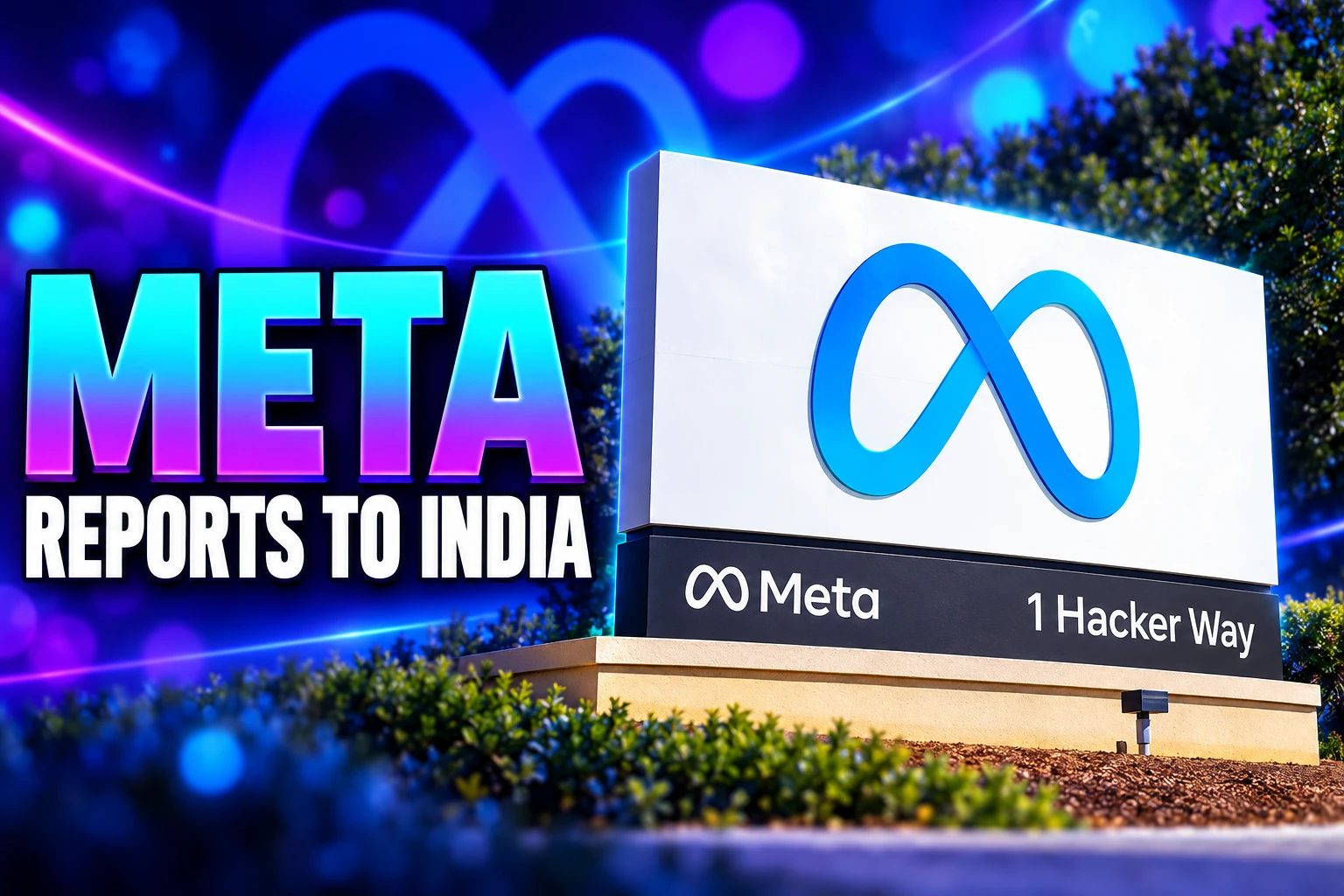
New Delhi Asked Kaplan for This in August
The September 15 line was not a surprise inside government. Meetings with Meta’s senior public-policy team ran for more than a week from August 5. Meta chief global affairs officer Joel Kaplan sat in those rooms. Indian officials asked that child sexual abuse cases, and details on repeat offenders, go straight to Indian agencies so police would not wait on the American hub.
Platform lawyers have long treated the U.S. Stored Communications Act as a hard stop on shipping automated detection files to foreign police. One proposal floated in August was a thinner feed: metadata on India-linked reports already sent to NCMEC, not the images themselves. Meta’s new wording, “child safety matters” sent “directly” to the I4C portal, does not say which of those models it will use.
Officials have also asked every other major platform to find and take down this material. None of those companies has yet matched Meta’s public promise of a direct I4C channel.
78 of 84 India Ads Came After the Order
The local pipe is a police-routing change. The material that forced the fight was paid advertising Meta’s own systems had already reviewed. In July, investigators in India found Instagram serving paid ads that used terms such as “rape video” and “child video” and sent users to Telegram channels selling the material for as little as 99 rupees (about 80p). India’s technology ministry ordered Meta to disable those ads and related content. The National Commission for Protection of Child Rights sent Meta a notice on July 3.
On September 8 the Washington-based Tech Transparency Project published a separate count. It found 332 paid ads with abuse imagery that had passed Meta’s review on Facebook and Instagram. 84 of those ads ran in India, and 78 of 84 appeared after the government had already told Meta to take this material down.
WHERE THE 332 ADS RAN
| Market | Ads logged by TTP | Note |
|---|---|---|
| United States | 262 | Nearly 80% of the 332 ads; ads can run in more than one country |
| Australia | 120 | Logged while Australia reviews Meta’s under-16 social media rules |
| India | 84 | 78 ran after the government takedown order |
| European Union (reach) | More than 29,000 people | Ad Library discloses EU and UK reach, not a full global tally |
| United Kingdom (reach) | 6,800 people | Two of the ads reached more than 2,500 users in the EU |
Those market counts overlap, so they do not add to 332. TTP could read reach only where Meta keeps ads on file, which is why the EU and UK figures are audience counts rather than extra ad totals. As of September 1, Meta had taken 183 of the 332 ads out of its Ad Library. After TTP shared the rest of its list on September 2, the company removed the remaining 149.
Meta told reporters it does not tolerate nudify apps or child exploitation, real or AI-generated, and that criminals keep changing tactics. It said most of the ads had fewer than 200 impressions and that total ad spend was below $5,000 (£3,700). Small receipts do not change the fact that the ads were paid inventory Meta had approved.
Meta’s Review Queue Called the Ads Compliant
Almost all of the TTP ads opened on a still photo of a child, then used AI to animate a sex act. TTP matched some of those stills to real children, including a young member of a European royal family and a 14-year-old who had posted a sports-club photo on Instagram. One India-facing ad used this voiceover: “There are no restrictions. All the characters are real people and there are many options. This is the AI men actually use.”
298 of the 332 ads sent users to AI image or video apps in the Apple or Google stores, 253 of them from China-based developers. In 182 cases TTP checked that the listed Apple apps could strip clothes from photos or build sex videos. Several ads were placed by Meta’s own China reseller partners, including GIMC, which is state-controlled.
These ads made no effort to mask the images or hide what they were promoting. It’s important to point out that this isn’t content posted by third parties on Facebook or Instagram, these are ads that were reviewed, approved, and allowed to run by Meta, never encountering interference while the company collected the ad dollars.
Katie Paul, director, Tech Transparency Project
TTP sent 129 live ads to Meta as sexual exploitation of someone under 18. The company’s replies split cleanly.
WHAT META’S AD QUEUE DID WITH 129 REPORTS
- Cleared as fine: On 73 ads, 57% of the reports, Meta replied that the ad did not go against its advertising standards.
- Already down: On 56 ads, 43%, Meta said the ad had already been removed, though six were still visible in the Ad Library.
- Wrong label: For 113 of the 332 ads, takedown notices cited adult-nudity rules or a generic disabled-account line and never mentioned children, until TTP flagged the mismatch.
- Split twins: Meta removed one ad and then told TTP an identical copy did not violate policy, even though the company says it hashes near-duplicate photos and videos.
Those replies sit next to Meta’s own child exploitation advertising standards, which already bar content that sexually exploits or endangers children. A July investigation got the same first answer on a flagged Instagram ad: the system said it did not break community standards. A local I4C inbox does not rescore that queue.
NCPCR, NHRC and a Supreme Court Petition
Indian agencies did not wait for the September 15 statement. They opened files in July and kept them open through the TTP count.
THE PRESSURE CALENDAR
- July 3, 2026: Investigators publish the Instagram ad findings. NCPCR, chaired by Valeti Premchand, issues a notice to Meta Platforms.
- Early July 2026: India’s technology ministry orders Meta to disable Instagram ads and other content that promote child sexual abuse material.
- July 8, 2026: The National Human Rights Commission asks the Delhi police commissioner for a full action-taken report and later issues notices to two ministries on whether Meta’s systems selected, spread, or made money from the material.
- August 5, 2026: Talks with Joel Kaplan and Meta’s policy team begin; Indian officials demand a direct local feed of cases and repeat-offender data.
- September 8, 2026: TTP publishes the 332-ad count, including 78 India ads after the order.
- September 9, 2026: Meta India managing director Arun Srinivas is summoned. Company representatives appear at NCPCR in New Delhi.
- September 10, 2026: A Supreme Court bench led by Chief Justice Surya Kant issues notices on a plea by Just Rights for Children Alliance, a network of more than 250 groups, seeking tighter child-safety rules for platforms.
- September 15, 2026: Meta says it will report child-safety matters directly to the I4C cybercrime portal.
Just Rights founder Bhuwan Ribhu has argued that routing cases only through the U.S. hub is not enough. The alliance’s court papers also point to a second mismatch: some platforms still let users open accounts from age 13, while Indian law treats anyone under 18 as a minor. NCPCR’s hearing is meant to test how the ads cleared Instagram’s filters and what Meta did after the July notice. A technology-ministry official was expected in that room as well.
What Direct Reporting Does Not Cover
The pledge is a routing promise. It is not a rebuild of the ad scanner that approved the clips, not a named start date, and not a public description of what an I4C file will contain. Meta still reports apparent child exploitation to NCMEC under U.S. law. Direct Indian filing, if it is more than a copy of those same tips, would be extra work on top of that duty, not a substitute for it.
It also does not bind YouTube, X, Snap, or any other service New Delhi has already told to find and remove this material. Officials have called Meta’s move the first of its kind among large platforms. They have not said the others have agreed to follow.
Hashing, reseller rules in the China ad channel, and the first-line decision that 73 reported ads were fine are all still inside Meta. Police speed depends on those systems throwing the right cases, with the right labels, into whichever inbox sits in Delhi.
The Cybercrime Portal Already Routes Child-Abuse Tips
I4C was approved in October 2018 and dedicated in January 2020. It became an attached office of the home ministry on July 1, 2024. Its brief is to act as the nodal point against cybercrime, with an explicit focus on offences against women and children. The National Cybercrime Reporting Portal opened in its current form after a 2019 launch, and it already highlights online child sexual abuse material. Complaints can be filed from anywhere in the country. The backend is built to route a case automatically to the state or union territory that should act, and a complainant can track status online.
That plumbing is why officials wanted Meta inside the portal rather than at the far end of an American queue. Thane police have already registered more than a dozen CSAM cases from NCMEC alerts that arrived through I4C, which shows the current path can produce local files when the tip is rich enough. The fight has been about delay, completeness, and whether Indian law is satisfied by a foreign clearing house.
WHAT WE KNOW
- The promise: Meta will send child-safety matters to the I4C-run cybercrime portal, while still reporting to NCMEC under U.S. law.
- The first mover: No other major platform has announced the same direct Indian channel.
- The ad record: 78 of 84 India ads in TTP’s set ran after the government order; 73 of 129 ads TTP reported were first judged compliant.
WHAT IS UNCONFIRMED
- Start date: Meta has not said when the first direct I4C filing will go out.
- Case list: “Child safety matters” is wider than CSAM ads, and the company has not defined the set.
- The file itself: It is unclear whether I4C will get images, hashes, account data, repeat-offender lists, or only metadata shaped to sit inside U.S. law.
On September 15 the government got the local address it asked Kaplan for in August. The ads that prompted the order had already run, cheaply, through a review queue that kept calling them fine. The next test is whether an I4C file arrives fast enough, and full enough, to do anything those ads did not.
Disclaimer: This article is news reporting and analysis of a company policy change and related investigations. It is informational only and is not legal advice, not a guide to criminal reporting duties, and not a substitute for child-protection guidance. Readers who need to report suspected child sexual abuse material, or who need advice on platform liability, should contact local police, I4C’s cybercrime portal, or a qualified lawyer or child-protection professional in their jurisdiction. Names, case counts, and operational details reflect the public statements and research cited here as of September 15, 2026, and may change as inquiries and the new reporting channel take shape.

Nesta Finds a Baby Blind Spot in Scotland’s GIRFEC Promise

FDA Closes Cyclospora Lettuce Probe Without Proving How

Pixel Watch 5 Discount Erases Google’s $50 Launch Hike

Pokémon GO Halloween 2026 Locks Candy Behind a Pass

ARX Robotics and Roboneers Tie Ukraine Combat to Western Fleets

Where Can I Cash a Comcheck – What Are My Options?

Arm Bets Compute Subsystems Will Reach Physical AI

The Yen Rally Was Funded by a Record Reserve Sale

OpenAI Turns ChatGPT Into a $1 Billion Ad Auction

Coremail Pitches AI-Native Email Security at LEAP 2026
-
 LIFESTYLE3 years ago
Where Can I Cash a Comcheck – What Are My Options?
-
 BUSINESS1 month ago
The Yen Rally Was Funded by a Record Reserve Sale
-
 NEWS1 month ago
Arm Bets Compute Subsystems Will Reach Physical AI
-
 BUSINESS2 months ago
OpenAI Turns ChatGPT Into a $1 Billion Ad Auction
-
 NEWS1 month ago
Coremail Pitches AI-Native Email Security at LEAP 2026
-
 NEWS1 month ago
Gottheimer’s AI LABS Act Enters an Already Crowded Field
-

 TECHNOLOGY3 years ago
How Many Cards in a Uno Deck – What’s the Exact Number?
-

 BUSINESS1 month ago
Ostrich Farms Rebuild Around a Tick-Bite Meat Allergy