
BUSINESS
The Yen Rally Was Funded by a Record Reserve Sale
The yen’s break to 152.89 per dollar follows a record Tokyo buying campaign, a reserve drawdown, and a nearly fully priced BOJ hike.

The Japanese yen jumped as far as 152.89 per dollar on Tuesday, its strongest level since February, after a US holiday session smashed through a floor that official buying never held. Tokyo Tanshi swap rates imply a 98% chance the Bank of Japan raises its benchmark from 1.00% to 1.25% on September 18, and the dollar index slipped to 98.83.
No fresh official buying has been confirmed behind this drop, and the yen has now firmed nearly 4% from around 160 per dollar early last week.
Tuesday Pushed the Yen Through July’s Floor
July’s joint yen purchases with the United States had capped the dollar near 155.20. That level held through a second official round and through weeks of fade-back toward 160. It did not hold on September 7, when US desks were shut for Labor Day, and it did not hold again on September 8.
THE TUESDAY TAPE
- Yen extreme: As far as 152.89 per dollar, the strongest since February.
- Week’s move: Nearly 4% firmer from around 160 yen early last week.
- Dollar index: 98.83, a touch weaker as the yen led G10.
- BOJ odds: Tokyo Tanshi swaps imply a 98% chance of a rise to 1.25%.
Teppei Ino at MUFG Research wrote that the pair broke below 155 on Labor Day, the floor that had marked the lows after Golden Week buying and after the late-July operation. He said that break then triggered about another yen of decline. The January low below 152.50 is now in view if covering continues.
Ino still called a lasting regime change premature. The buying has been fed by Japanese policy talk, by a wait for US consumer prices on September 11, and by a dollar that failed to rally even after nonfarm payrolls rose 162,000 in August.
The ¥15.4 Trillion That Stopped at 155
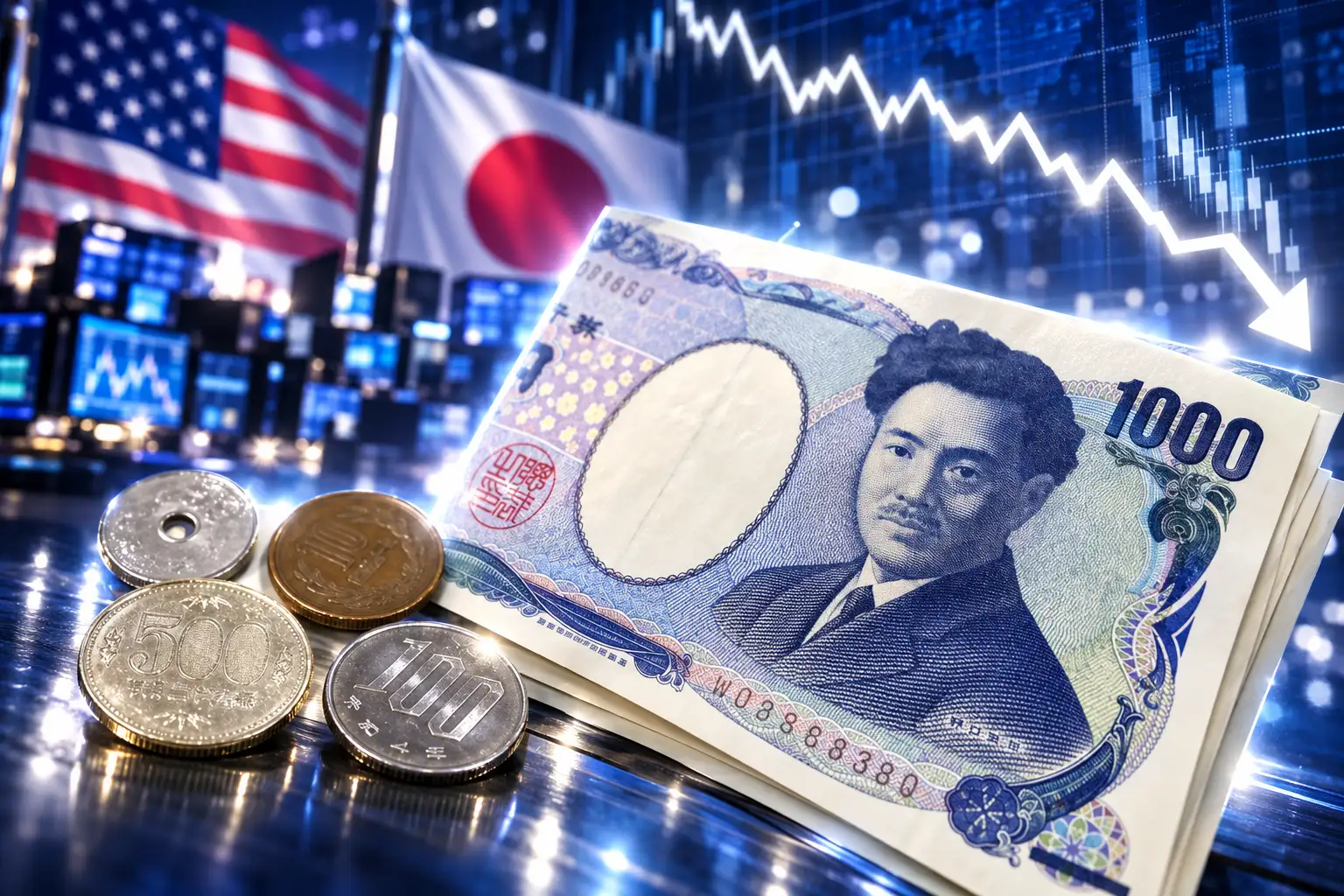
The Ministry of Finance put the latest operation at ¥15,399.3 billion of yen-buying operations from July 30 through August 26, the largest monthly total on its books. A prior Golden Week round had already taken 2026 buying above ¥27 trillion, more than the previous annual record of about ¥15 trillion in 2024.
Karen Fishman, senior FX strategist at Goldman Sachs Research, said Japan’s first two days, July 30 and July 31, were the largest two-day intervention on record outside October 2011, and she put that opening burst at up to $85 billion. Praneet Shah, who runs FX options trading at the firm, estimated about $60 billion on the Thursday and about $25 billion on the Friday, against roughly $30 billion of average daily volume. He said a 3% dollar-yen move across those two days wiped out a year of yen-funding carry in one go, which is why leveraged books had to cut.
FROM 164 TO THE HOLIDAY BREAK
- Late July: The dollar trades near 164 yen, the weakest yen in about 40 years.
- July 30 and July 31: Tokyo buys yen in size; Washington joins on July 31.
- August 3: The yen firms as far as 155.20 per dollar, then drifts back toward 160.
- July 30 through August 26: The ministry books ¥15,399.3 billion of operations.
- September 7: With US markets closed, the pair falls through 155 to a 154.06 low and closes at 154.34.
- September 8: The yen extends to 152.89, through the post-intervention high, with no new official buying confirmed.
Fishman said the US role was much smaller than Japan’s, historically around $1 billion to $2 billion, and that the point was the signal. Shah said that smaller US bid still added about another 2% once traders believed Washington was in. The symbolism moved the rate. The stock of yen still needed a policy rate to stay there.
Japan’s Reserve Account Shows the Real Bill
The Finance Ministry said Japan’s reserve assets at $1,207,524 million at the end of August, down $79,575 million from July, a 6.18% drop and the largest since comparable figures begin in April 2000. Foreign-currency holdings inside that total were $994,976 million. The ministry’s own notes say securities and gold are marked to market, so the account mixes paper that was sold with paper that simply got cheaper.
JAPAN’S AUGUST RESERVE ACCOUNT
| Line | End of August | What it is |
|---|---|---|
| Official reserve assets | $1,207,524 million | Down $79,575 million from July |
| Foreign currency reserves | $994,976 million | Securities plus deposits |
| Securities | $839,559 million | Marked to market; down $87.8 billion on the month |
| Deposits | $155,417 million | Mostly at foreign central banks and the BIS |
| Gold | $124,103 million | 27.20 million fine troy ounces |
The $87.8 billion fall in securities is close to the scale of the yen-buying bill, and market desks still treat about 70% of the reserve book as US Treasuries. That does not mean Tokyo dumped $87.8 billion of notes in one clip. Bond prices fell as yields rose, and the ministry said the reserve drop reflected both cheaper remaining bonds and the dollars used to buy yen. Other foreign-currency assets were $35,285 million. The remaining stock is still large enough for another round if Mimura and Finance Minister Satsuki Katayama want one.
Selling reserve bonds to fund yen purchases is also a dollar story. Japan raising cash against Treasuries, or selling them outright, is extra supply in the same market Treasury Secretary Scott Bessent has been trying to calm with larger longer-dated buybacks through November 4. Katayama has pointed to the Fed’s FIMA repo line as another way to raise dollars without a straight sale. The August numbers show the cheaper path was not the one fully taken.
What Washington Wanted in Return
Ino’s note treats Bessent’s G20 comments as the switch that let overseas accounts position for an end to Japan’s reflation mix. Bessent said Japan should move away from those policies, and he said he was confident Tokyo and the Bank of Japan would take steps that would lead to a stronger yen. The US Treasury’s readout of his meeting with Governor Kazuo Ueda went further. Bessent “emphasized the importance of sound formulation and communication of monetary policy to anchor inflation expectations and avoid excess exchange rate volatility,” and he “expressed strong support for Japan’s decisive market and monetary steps to address the substantial undervaluation of the yen.”
Ueda, in his last public remarks before the blackout ahead of the September 17-18 meeting, left the door open without pre-committing.
A rate hike will be discussed thoroughly in every meeting, including the next one.
Kazuo Ueda, Governor, Bank of Japan, after the G20 meeting
He has already raised rates five times and said the board must weigh that cumulative hit against upside price risks. Board member Hajime Takata then told local business leaders the bank should “conduct rate hikes nimbly” and not be “bound by particular intervals or ranges anticipated in the markets.” He later played down a jumbo move at this meeting, but the nimbly line was enough for swaps to treat a 25 basis point step as close to done, and to talk about another before year-end.
Takuji Aida, economic adviser to Prime Minister Sanae Takaichi and until recently a loud skeptic of faster tightening, now expects a hike at this meeting and another by January. That turn matters because the political constraint on Ueda has been the government, not the tape. Ino also flagged a quieter domestic bid: the Government Pension Investment Fund, which manages about ¥300 trillion, put a basic-portfolio review on an August board agenda, the first August sitting in about seven years, after Katayama said she wanted pension money steered toward Japanese assets. Even a 1% shift would be a real flow. The minutes will not be out for months, so that bid is still a rumor with a very large balance sheet behind it.
The Forecast That Still Assumes ¥160
A stronger yen is what households were told they needed. It is also a direct hit to the companies that had been banking the opposite. Toyota Motor, in its August revision, moved its dollar assumption from 150 yen to 160 yen and lifted its operating profit outlook to ¥3.4 trillion. The weaker-yen shift added ¥480 billion to that forecast, about ¥48 billion of operating profit for each yen. The pair near 153 is about seven yen stronger than 160. If that gap held for the year, about ¥336 billion of the upgrade would be at risk.
Chief accounting officer Takanori Azuma said the revision “reflects changes in the external environment, including foreign exchange assumptions.” Carmakers that report in yen and earn in dollars do not get to keep both a 160 yen model and a 153 yen market. Honda and Nissan sit on the same side of that ledger. Importers and households sit on the other, because fuel, food and energy, almost all of it imported, get cheaper when the yen pays for more dollar.
WHO FEELS A STRONGER YEN FIRST
- Toyota’s model: The full-year plan still uses 160 yen per dollar after a ¥480 billion FX upgrade.
- Other exporters: Honda and Nissan face the same translation hit if 153 holds.
- Households and importers: A firmer yen lowers the yen cost of energy and food Japan has to buy abroad.
- Yen-funding books: Carry trades that borrow yen and buy higher-yielding assets lose both the rate gap and the spot move at once.
Fishman put the basic split in plain terms: a weak yen raises grocery, gas and power bills and government borrowing costs, while it helps exporters and inbound tourists. The official buying was always a choice to take some of that exporter cushion back. Tuesday’s print just did it faster than the ministry’s own bids had managed.
Why the Move Ran So Fast on Monday
US cash markets were closed on September 7 for Labor Day, so global books were thinner and a stop through 155 had less opposing flow. Options dealers who had sold yen calls below that level then had to buy yen as the pair fell, which steepened the same move. That is mechanical hedging, not a new ministry order. Bank of Japan data had already shown no ministry yen buying behind the earlier September 2 dip, and nothing official has been confirmed behind this one either.
The 25 basis point hike that swaps now treat as 98% priced is not, on its own, a reason for leveraged yen-funding books to cover. A break of the level that had capped two official rounds is. Once 155 gave way, the next bids came from stops and from dealers, and the holiday tape let that run farther than a New York afternoon would have. If those funding books do not keep covering, a fully priced hike can leak back just as fast, because the next bullish surprise has to be a second move, not the first.
That is why the remaining short base still matters. Hedge funds added to net yen shorts into September 1 even after the July-August official buying, which left a crowded side of the boat when 155 broke. Cross-border yen borrowing is still the cheap leg of a lot of global trades. The risk into September 18 is not that Tokyo spends another ¥15,399.3 billion. It is that private cover does the job in a hurry, then looks around for a reason to stay long yen, and finds only a hike that is already in the price.
A September Hike Is Almost Fully Priced
Ueda’s board meets September 17-18. The European Central Bank is widely expected to raise rates on September 10. The Federal Reserve meets September 15-16, with about a 60% chance of a hike after the payrolls beat, and Friday’s US consumer-price report is the last big print before that vote. US wage growth in the same jobs report slowed to 3.1% year on year, which is why several Fed officials said they wanted the September 11 figure before they decide.
THE POLICY CALENDAR INTO SEPTEMBER 18
| Date | Event | What is priced |
|---|---|---|
| September 10 | European Central Bank | A rate increase widely expected |
| September 11 | US consumer prices | Last major print before the Fed |
| September 15-16 | Federal Reserve | About a 60% chance of a hike |
| September 17-18 | Bank of Japan | 98% chance of a move to 1.25% |
Japan’s second-quarter growth was revised up, and real wages rose 2.4% in July, which gives Ueda cover if he wants to match the 98% priced move. He also has FY27 budget requests totaling ¥143 trillion against a ¥122 trillion initial budget this year, the fiscal impulse Bessent has been needling. Ino’s caution still stands: unless dollar-yen quickly reclaims 155, desks may start treating that level as a ceiling, but oil, the trade deficit and a still-easy real policy rate can put 160 back on the screen if the Bank of Japan only delivers what swaps already own.
Dealers now need the Bank of Japan to match that 98% priced hike on September 18, and to leave the door open to another, or the move that ran through 155 on a holiday tape will have to live on carry cover alone.
Disclaimer: This article is news reporting and analysis of currency and central-bank developments, and it is for information only. It is not investment advice, a solicitation to buy or sell yen, dollars, Japanese or US government bonds, or shares in exporters such as Toyota, Honda or Nissan, and it is not a forecast you should trade. Speak with a licensed financial adviser or currency specialist who knows your situation before you act on any rate, level or probability cited here. Figures, policy odds and exchange rates reflect the ministry data, swap pricing and market prints available on September 8, 2026, and they can change with the next print, the next official comment, or the September 18 decision.

Nesta Finds a Baby Blind Spot in Scotland’s GIRFEC Promise

FDA Closes Cyclospora Lettuce Probe Without Proving How

Pixel Watch 5 Discount Erases Google’s $50 Launch Hike

Pokémon GO Halloween 2026 Locks Candy Behind a Pass

ARX Robotics and Roboneers Tie Ukraine Combat to Western Fleets

Where Can I Cash a Comcheck – What Are My Options?

OpenAI Turns ChatGPT Into a $1 Billion Ad Auction

Arm Bets Compute Subsystems Will Reach Physical AI

The Yen Rally Was Funded by a Record Reserve Sale

Coremail Pitches AI-Native Email Security at LEAP 2026
-
 LIFESTYLE3 years ago
Where Can I Cash a Comcheck – What Are My Options?
-
 BUSINESS2 months ago
OpenAI Turns ChatGPT Into a $1 Billion Ad Auction
-
 NEWS1 month ago
Arm Bets Compute Subsystems Will Reach Physical AI
-
 NEWS1 month ago
Coremail Pitches AI-Native Email Security at LEAP 2026
-

 NEWS1 month ago
Gottheimer’s AI LABS Act Enters an Already Crowded Field
-

 BUSINESS1 month ago
Ostrich Farms Rebuild Around a Tick-Bite Meat Allergy
-

 TECHNOLOGY3 years ago
How Many Cards in a Uno Deck – What’s the Exact Number?
-

 LIFESTYLE3 years ago
Where to Get a Mantoux Test – What Are the Available Locations?