
NEWS
Chopra Turns California License Boards Against AI Chatbots
Rohit Chopra’s BCSA will test AI chatbots against existing license rules, a CFPB-style move that needs no new California AI statute.

On August 31, 2026, Rohit Chopra said California’s new Business and Consumer Services Agency will examine how companies use AI chatbots and other automated tools. The agency secretary wrote that the review will test whether those tools harm consumers or undercut existing license and consumer-protection rules.
Chopra Posted His AI Memo as the Session Closed
The post is titled “Ensuring New Technologies Benefit All Californians.” Chopra said the BCSA will look at chatbots, software, and other automated tools that talk to customers and that pick up work licensed people usually do. He named scams, pricing, consumer data, and security, and said the agency will work with other California offices that watch housing and health care.
The memo creates no new legal duty. It tells supervised firms that license law is the first hook, and that the person running the boards used to run the federal consumer bureau.
The California Legislature’s session ended that same day. On September 9, 2026, Governor Gavin Newsom signed bills that set standards for independent AI audits and a state registry of AI auditors. On September 10, 2026, he signed companion chatbot rules for children, including Adam’s Law (SB 1119), which adds crisis protocols, parental controls, independent child-safety audits, and annual risk assessments for companion bots. Chopra’s memo is the enforcement voice in that week, not the drafting voice.
THE CHOPRA CLOCK
- February 2025: The Trump administration removes Chopra from the Consumer Financial Protection Bureau, ending a tenure that ran from 2021 to 2025.
- May 12, 2026: Newsom appoints him inaugural secretary of the Business and Consumer Services Agency, a cabinet post still subject to state Senate confirmation.
- July 1, 2026: Newsom swears him in as the agency opens, split from the old business, consumer services, and housing umbrella.
- July 16, 2026: The agency warns mortgage firms that withholding insurance funds from Los Angeles fire rebuilds may draw state and federal consumer-protection cases.
- July 23, 2026: Chopra asks the public for tips on dishonest pricing, inflated fees, hidden kickbacks, and other schemes that push up household costs.
- August 31, 2026: He publishes the emerging-technology memo on chatbots, software, automated tools, and unlicensed professional activity.
- September 9-10, 2026: Newsom signs the AI-audit bills and the child-safety chatbot package.
The technology post arrived in the agency’s second month, after Chopra had already used the new perch on prices, fire payouts, and a federal data-security fight. The AI line is a continuation of that posture, aimed at software that sits where a licensed person used to sit.
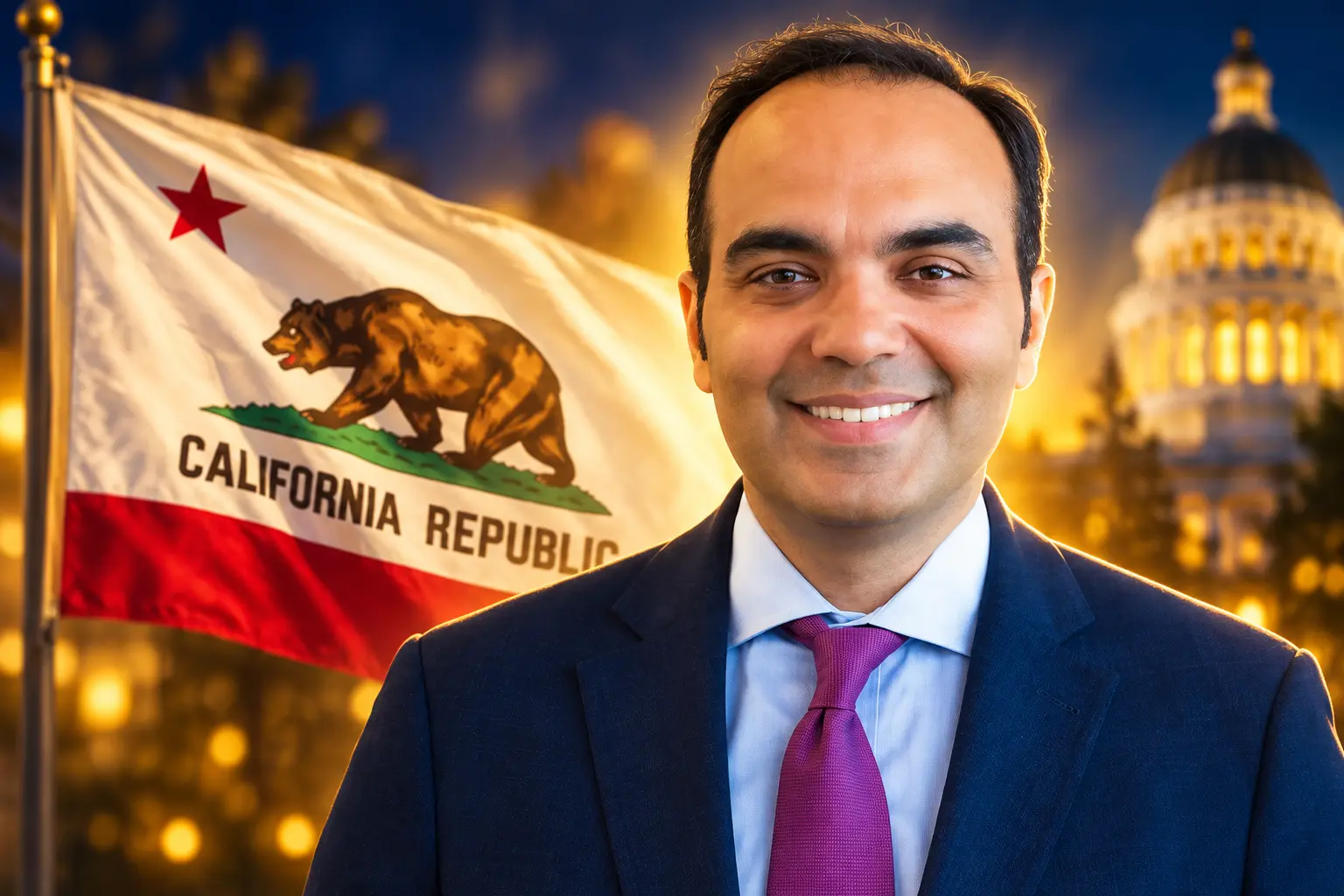
A Cabinet Roof Over Real Estate, Cannabis, and Banks
Governor Gavin Newsom swore Chopra in on July 1 as the first secretary of a cabinet agency built, the governor’s office said, as federal consumer protection rolled back. Newsom called Chopra a leader who had spent his career fighting for working families, protecting consumers, and holding powerful interests accountable. Chopra said California consumers and small businesses are paying the price for harmful and corrupt practices, and that the new agency will sharpen work to protect the public from abuses.
The BCSA does not replace the Department of Financial Protection and Innovation. DFPI keeps its own statutes, including the California Consumer Financial Protection Law. Chopra sits above it, and above the boards that license real estate, professions, alcohol, cannabis, and horse racing. The governor’s office said the stack covers financial services, health care, real estate, retail, hospitality, agriculture, and higher education.
THE DEPARTMENTS UNDER THE NEW ROOF
- Money and credit: The Department of Financial Protection and Innovation, which licenses and can sue across banks, credit unions, lenders, fintechs, money transmitters, digital-asset firms, and debt collectors.
- Homes: The Department of Real Estate, which polices brokers and related licensees.
- Trades and professions: The Department of Consumer Affairs, whose boards and bureaus cover a long list of licensed work the governor’s office grouped with “dozens” of units under the new roof.
- Alcohol, cannabis, racing: The Department of Alcoholic Beverage Control and its appeals board, the Department of Cannabis Control and its appeals panel, and the California Horse Racing Board.
That is eight named departments and appeals bodies, plus the many professional boards that live inside Consumer Affairs. A chatbot that answers a mortgage question, walks a user through a listing, or coaches a medical choice can touch more than one of those doors at once.
THE AGENCY IN BRIEF
- Opened: July 1, 2026, after Newsom’s 2025 reorganization split housing off into a separate cabinet agency.
- Federal record: Nearly $10 billion in refunds and penalties during Chopra’s CFPB years, according to the governor’s office, plus a junk-fee campaign and earlier work as an FTC commissioner from 2017 to 2021.
- First-year goals: Protect consumers and small firms, hit anticompetitive and corrupt practices, and make sure new technologies benefit Californians.
- Tenure: He serves at the governor’s will and may keep the job while the Senate weighs confirmation.
President Trump nominated Chopra to the FTC in 2017, and the Senate confirmed him unanimously. He left that seat in 2021 for the CFPB, then left the CFPB in February 2025 after Trump returned to office. The California post is the next platform, and it is wider than consumer finance.
When a Chatbot Starts Acting Like a Licensee
The August 31, 2026 memo’s sharp edge is unlicensed professional activity. Chopra said technology is increasingly used to talk directly to consumers and to supplement work traditionally done by licensed professionals. The BCSA intends to examine whether some of those uses cross the line into unlicensed practice or other existing protections.
That path does not wait on a new AI bill. California already forbids unlicensed legal, medical, real-estate, and financial work. A bot that drafts advice, prices a risk, or steers a transaction can look, to a licensing board, like a person doing the job without a card. The memo tells companies the boards will read the output that way.
Finance, Real Estate, and Health Care
DFPI already watches lending, collections, and digital-asset products. A credit chatbot that nudges a borrower toward a loan, a servicing bot that handles hardship, or an investing assistant that sounds like advice is now on a list the secretary has described in public. The Department of Real Estate sits in the same agency, so listing bots, occupancy tools, and automated valuation chat sit in the same line of sight. Chopra also said the BCSA will coordinate with offices that oversee housing and health care, where intake bots and symptom tools can shade into practice questions even when the license sits in another department.
Third-party vendors do not sit outside that map. Firms that bolt a model onto a licensed shop, or that sell a white-label assistant to a broker or clinic, are in the same review Chopra described for “software and other automated tools.” The memo’s language is about how businesses use the technology, not only about who built the model.
The Memo Writes No New Duty
Law-firm notes that circulated after August 31, 2026 treated the post as a supervision warning, not as a consumer uprising, and that reading matches the text. There is no complaint portal unique to AI, no named defendant, and no proposed regulation attached to the memo. The instruction to industry is still concrete: map every bot that faces a California customer or that does work a licensee used to do, then ask whether the output would be illegal if a person said it without a license.
Disclosure laws already on the books do not answer that question. A banner that says “you are talking to a bot” can satisfy a transparency rule and still leave the substance of the answer inside unlicensed-practice territory. Chopra’s list of concerns (scams, pricing, data, and security) sits on top of that older license line, which is why a company can be in trouble with a board even after it labels the bot.
The CFPB Record Follows Him to Sacramento
Chopra’s federal years are the reason licensed firms are reading a blog post as an exam notice. The governor’s office said that during his CFPB tenure the bureau recovered nearly $10 billion in refunds and penalties from companies that broke the law, and that he led work on junk fees and on opening up payments and banking. As an FTC commissioner he pushed harder remedies against repeat offenders and backed tougher cases against dominant technology platforms.
In his last stretch at the CFPB he issued a January 2025 state-enforcement playbook that read like a manual for states that would have to work without a full-strength federal partner. The California job is that manual in institutional form: one cabinet secretary over license boards and a mini-CFPB, rather than a string of one-off attorney general cases.
Californians and families across the country are feeling squeezed by higher prices, fees, and other costs. To add insult to injury, federal regulators and law enforcement are turning a blind eye to illegal upcharges that we all pay the price for. A key priority for the agency is to crack down on harmful and corrupt practices that wrongfully raise costs for families and honest businesses.
Rohit Chopra, Secretary, California Business and Consumer Services Agency, July 23, 2026 blog
He has already translated that line into tech-adjacent work. Within a week of launch, the BCSA urged the FTC to deny a social media company’s bid to end a long-running data-security consent order, arguing that mishandled personal data exposes users to fraud. Mid-July brought the fire-insurance warning to mortgage companies. The August 31, 2026 chatbot memo is the same method aimed at automated customer contact: find the existing statute, then treat the software as if a person had done the act.
Fee design, dark patterns, algorithmic pricing, and data use were the federal tells. A bot that hides a charge, steers a user off a cheaper option, or harvests extra data while playing helper fits that older file even if no one ever calls it “AI policy.”
The January 2027 Deadline on Automated Decisions
Chopra does not run the California Privacy Protection Agency, but the BCSA memo lands on top of privacy rules that already name automated tools. On September 23, 2025, the Office of Administrative Law approved CPPA regulations on cybersecurity audits, risk assessments, and automated decisionmaking technology privacy rules. The package took effect January 1, 2026. Businesses that use ADMT to make significant decisions must meet the ADMT duties beginning January 1, 2027.
Jennifer Urban, chair of the CPPA Board, said the rules keep California’s privacy protections in place while leaving room for how businesses actually implement them. Significant decisions, in the CPPA text, are decisions that grant or deny financial or lending services, housing, education, employment or contracting, or health care. ADMT means technology that processes personal information and uses computation to replace human decision-making, or to substantially replace it, which the rules define as using the output without a human who can interpret it, weigh other facts, and change the call.
THE RULES THAT ALREADY TOUCH BOTS
| Instrument | Date | What it requires | Who it binds |
|---|---|---|---|
| BCSA emerging-tech memo | August 31, 2026 | Review of chatbots and automated tools against existing license and consumer rules, including unlicensed activity | Businesses under BCSA departments |
| CPPA ADMT rules | Duties begin January 1, 2027 | Pre-use notice, opt-out, and access rights when automated tools make significant decisions | CCPA-covered businesses using ADMT |
| SB 243 companion chatbots | In force January 1, 2026 | Disclosure and safety protocols for companion chatbots; signed October 13, 2025 | Companion-chatbot operators |
| Adam’s Law (SB 1119) | Signed September 10, 2026 | Crisis protocols, parental controls, independent child-safety audits, and annual risk assessments | Companion-chatbot firms that reach children |
Risk assessments tied to the CPPA package had their own start on January 1, 2026, with a first filing window of April 1, 2028, for assessments done in 2026 and 2027. Cybersecurity-audit certifications then follow a revenue ladder beginning April 1, 2028, for firms over $100 million. Those clocks belong to the privacy agency. Chopra’s memo adds a separate risk: a license case that does not care whether the privacy notice was perfect.
SB 243, the companion-chatbot law that took effect January 1, 2026, is the other live overlay. It is a product-safety and disclosure statute for relationship-style bots, not a substitute for DFPI or Real Estate enforcement. Adam’s Law tightens the child-safety side of that same product class. A company can owe duties under all four rows in the table for one assistant that chats, decides, and holds a minor in a long thread.
License Boards Gain a Federal-Style Enforcer
Licensed trades are the quiet winners in the memo, because a secretary who used to run a federal enforcement shop is now telling their boards that software doing their work is in scope. Brokers, advisers, collectors, and health licensees who already feared unpaid digital substitutes have a cabinet-level ally who talks in the language of junk fees and unlicensed practice. The cost is that those same licensees will be asked how they use bots inside their own shops, including vendor tools they do not fully control.
The firms on the other side of that line are consumer-facing platforms, fintechs, real-estate portals, telehealth and wellness apps, and any vendor that sells a conversational layer into a licensed channel. California is a large enough market that a product built for a national rollout still has to survive a Sacramento reading of unlicensed practice. A model that is legal as a general-purpose chatbot can still fail if its California outputs look like brokerage, lending, or care.
WHO NEEDS TO MAP WHICH BOTS
- Lenders and fintechs: Origination, servicing, collections, and “money coach” assistants that can sound like credit advice or steer a product.
- Brokers and portals: Listing chat, occupancy Q&A, and pricing tools that walk a user toward a transaction a licensee would have to disclose.
- Clinics and wellness apps: Intake and triage bots whose answers can be read as practice, even when a human is somewhere in the company.
- Vendors: White-label assistants sold into those shops, because Chopra described the review as how businesses use the tools, including third-party software.
Complaint volume will matter. The agency said it is building channels for consumers, businesses, and whistleblowers to file tips, and Chopra’s July 23, 2026 post already asked the public to send examples of harmful and corrupt practices that raise costs. A bot that overcharges, traps a user in a paid loop, or harvests extra data is an easier first case than a pure “this model practiced law” theory, and it can still open the unlicensed-practice file once investigators are inside the product.
The Appointment Ends When the Governor Does
Chopra serves at the governor’s will. His nomination still needs Senate confirmation, and he may stay in the job while that vote waits. Newsom’s current term runs through January 2027, which is the same month ADMT duties begin. The license-board theory of AI enforcement therefore has a named political clock, even if the underlying statutes do not expire.
The August 31, 2026 memo will still sit in exam files after that date, because it told every shop under DFPI, Real Estate, and Consumer Affairs how this secretary reads chatbots. Companies that wait for a formal BCSA rulemaking will have missed the point of the post. The rule he pointed at is already on the books, and it is the one that says you need a license to do the work.
Disclaimer: This article is news reporting and analysis of public statements, agency structure, and existing California rules. It is informational only and does not constitute legal advice, regulatory advice, or a compliance opinion for any company or product. Readers who operate chatbots, automated tools, or licensed services in California should consult a qualified California-licensed attorney about their specific facts before changing products, contracts, or filings. Dates, duties, and enforcement postures reflect the official statements and rules cited here and may change through later guidance, rulemaking, or cases.

Nesta Finds a Baby Blind Spot in Scotland’s GIRFEC Promise

FDA Closes Cyclospora Lettuce Probe Without Proving How

Pixel Watch 5 Discount Erases Google’s $50 Launch Hike

Pokémon GO Halloween 2026 Locks Candy Behind a Pass

ARX Robotics and Roboneers Tie Ukraine Combat to Western Fleets

Where Can I Cash a Comcheck – What Are My Options?

The Yen Rally Was Funded by a Record Reserve Sale

OpenAI Turns ChatGPT Into a $1 Billion Ad Auction

Arm Bets Compute Subsystems Will Reach Physical AI

Gottheimer’s AI LABS Act Enters an Already Crowded Field
-
 LIFESTYLE3 years ago
Where Can I Cash a Comcheck – What Are My Options?
-
 BUSINESS1 month ago
The Yen Rally Was Funded by a Record Reserve Sale
-
 BUSINESS2 months ago
OpenAI Turns ChatGPT Into a $1 Billion Ad Auction
-
 NEWS1 month ago
Arm Bets Compute Subsystems Will Reach Physical AI
-

 BUSINESS1 month ago
Ostrich Farms Rebuild Around a Tick-Bite Meat Allergy
-

 NEWS1 month ago
Coremail Pitches AI-Native Email Security at LEAP 2026
-
 NEWS1 month ago
Gottheimer’s AI LABS Act Enters an Already Crowded Field
-

 TECHNOLOGY3 years ago
How Many Cards in a Uno Deck – What’s the Exact Number?