
Health
How Long Does an Antibiotic Stay in Your System? Medication Duration

ExcretoryAntibiotics are a crucial tool in fighting bacterial infections, but have you ever wondered how long they linger in your system after you finish the prescribed course? When taking antibiotics, it’s essential to understand their duration in your body to ensure you’re not risking further issues, such as antibiotic resistance, side effects, or decreased effectiveness of future medications. The longevity of an antibiotic in your system depends on various factors, including the specific type of antibiotic, your overall health, and how well your body processes the medication. In this blog post, I’ll cover the typical duration of antibiotics in your system, as well as the factors that can affect their stay and what you can do to ensure their safe and effective use.
Key Takeaways:
- Antibiotics can stay in your system for different durations depending on the specific medication and individual factors such as metabolism and liver function.
- Drug half-life is an important factor in determining how long an antibiotic stays in your system. It refers to the time it takes for the concentration of the drug in your body to be reduced by half.
- The duration of antibiotics in your system can range from a few hours to several days, depending on the specific antibiotic and individual factors.
- It is important to complete the full course of antibiotics as prescribed by your healthcare provider, even if you feel better before the medication is finished, in order to fully eradicate the infection and prevent antibiotic resistance.
- Consult with your healthcare provider if you have concerns about how long an antibiotic may stay in your system, especially if you have underlying health conditions or are taking other medications that may interact with the antibiotic.
Factors Affecting Antibiotic Duration
To understand how long antibiotics stay in your system, it’s important to consider various factors that can affect the duration. These factors can range from the type of antibiotic you are taking to individual factors such as your age and overall health.
Type of Antibiotic
When it comes to the duration of antibiotics in your system, the type of antibiotic plays a significant role. Different antibiotics have different half-lives, which is the amount of time it takes for half of the drug to be eliminated from your body. Some antibiotics have a short half-life and may be eliminated from your system within a few hours, while others have a longer half-life and may take several days to be completely cleared.
Individual Factors
Individual factors such as age, weight, kidney function, and liver function can also impact the duration of antibiotics in your system. For example, as we age, our metabolism tends to slow down, which can affect how quickly our body processes and eliminates medications. Additionally, individuals with compromised kidney or liver function may have a decreased ability to clear antibiotics from their system, leading to a longer duration of action. This is particularly important for individuals who may require dose adjustments or extended monitoring to ensure the antibiotics are safely and effectively cleared from their system.
Monitoring Antibiotic Levels
Blood Tests
Obviously, it’s essential to monitor antibiotic levels in your system to ensure that the medication is working effectively and that it’s not reaching dangerous concentrations. One way to do this is through blood tests. These tests measure the amount of the antibiotic in your blood at specific intervals after you’ve taken the medication. This can help determine if the antibiotic is at the right level to fight off the bacteria causing your infection. It can also signal if the antibiotic is lingering too long in your system, putting you at risk for side effects or antibiotic resistance.
Urine Tests
Another method for monitoring antibiotic levels is through urine tests. When you take an antibiotic, your body breaks it down and excretes it through your urine. By analyzing your urine, healthcare providers can determine how much of the antibiotic is being eliminated from your system. This can provide insight into how efficiently your body is processing the medication and if adjustments need to be made to your dosing regimen. Urine tests can also detect the presence of any toxic byproducts or metabolites of the antibiotic, which could indicate potential harm to your kidneys or liver.
Effects of Prolonged Antibiotic Use
After taking antibiotics for an extended period, it’s important to be aware of the potential effects on your body. For more information on how long antibiotics stay in your system, visit How Long Do Antibiotics Stay in Your System?
Resistance
One of the most significant concerns with prolonged antibiotic use is the development of antibiotic resistance. This occurs when bacteria evolve and become resistant to the effects of antibiotics, making the infections they cause harder to treat. It’s important to follow your doctor’s instructions when taking antibiotics and to never use them without a prescription. Overusing or misusing antibiotics can contribute to the development of antibiotic-resistant bacteria, which poses a serious threat to public health.
Side Effects
Another potential consequence of prolonged antibiotic use is the development of side effects. While antibiotics can be life-saving medications, they also come with risks. Common side effects include nausea, vomiting, diarrhea, and allergic reactions. In some cases, antibiotics can also cause more severe side effects such as kidney or liver damage. It’s important to be mindful of any unusual symptoms while taking antibiotics and to report them to your healthcare provider.
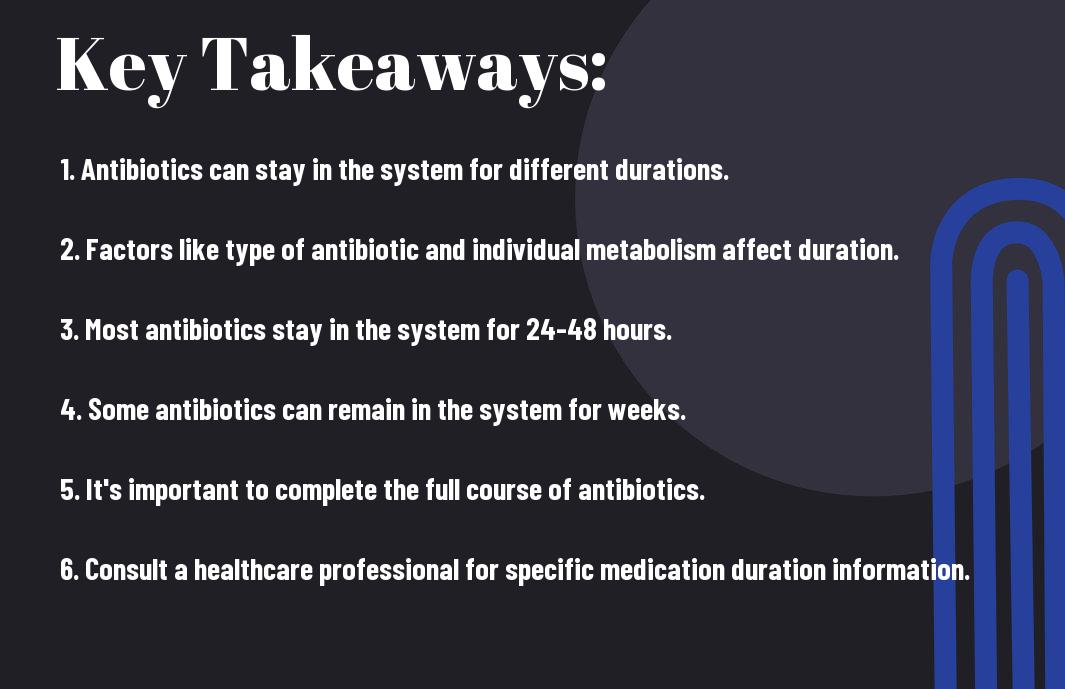
Conclusion: How Long Does an Antibiotic Stay in Your System? Medication Duration
Considering all points, it is important to remember that the duration an antibiotic stays in your system can vary depending on factors such as the specific medication, your body’s metabolism, and any underlying health conditions you may have. It is always best to consult with a healthcare professional for personalized information about how long a specific antibiotic may stay in your system. If you are curious about a specific antibiotic, such as azithromycin, you can find more information on how long it stays in your system here.
FAQ
Q: How long does an antibiotic stay in your system?
A: The duration an antibiotic stays in your system can vary depending on the type of antibiotic and your body’s unique metabolism. Generally, most antibiotics are fully eliminated from the body within 5 to 10 half-lives, which can range from a few hours to a few days.
Q: What factors can affect how long an antibiotic stays in my system?
A: Factors such as the type of antibiotic, dosage, frequency of dosing, your overall health, kidney and liver function, and other medications you may be taking can all influence how long an antibiotic remains in your system.
Q: Can I stop taking an antibiotic once I feel better?
A: It is important to finish the entire course of antibiotics as prescribed by your healthcare provider, even if you start to feel better before the medication is finished. Stopping prematurely can lead to antibiotic resistance and the recurrence of the infection.
Q: Are there any foods or drinks that can affect the absorption or elimination of antibiotics?
A: Certain antibiotics may interact with specific foods and beverages, affecting their absorption or elimination. It is best to consult with your healthcare provider or pharmacist about any dietary restrictions while taking a particular antibiotic.
Q: What should I do if I experience side effects from an antibiotic after I have finished the medication?
A: If you experience side effects after completing a course of antibiotics, it is important to contact your healthcare provider. They can assess the situation and determine if any further action or treatment is necessary.

-
 Entertainment2 years ago
Does The Rock Have a Twin Brother? Exploring Celebrity Family Facts
-
 Lifestyle2 years ago
How Long Does a Killer Whale Live – What's Their Average Lifespan?
-
 Lifestyle2 years ago
How Many Hairs Are on a Human Head? Understanding Hair Density
-
 Lifestyle2 years ago
What Is an Industrial Plant? Exploring Industrial Facilities
-
 Technology2 years ago
How Far Can a Human Eye See – What's the Maximum Range?
-
 Lifestyle2 years ago
North Carolina Education Lottery App – Playing Lottery Games on Mobile
-
 Technology2 years ago
How Many People Can Solve a Rubik's Cube – Is It a Common Skill?
-
 Technology2 years ago
Is Dr. Pepper a Coke Product – Who Manufactures It?